 How-to
How to Find Safe Rides Home: A Complete 2026 Guide
Table of Contents
- How to Find Safe Rides Home: Start With a Plan
- Plan a Ride Home in Advance
- How to Book a Safe Ride: App, Phone, or Text
- Rideshare Safety Tips Before You Get In
- How to Get a Free Ride Home After Drinking
- Compare Ride Options: Rideshare, Taxi, and Public Transit
- What to Do When No Ride Service Is Available
- Frequently Asked Questions
Last Updated: October 21, 2026
How to Find Safe Rides Home: Start With a Plan
Knowing how to find safe rides home starts before the first drink, not after last call.
Most people treat the ride home as an afterthought, assuming a car will appear when they need one. Then the bars close, the app spins, and the price doubles.
Below, we break down how to plan, book, verify, and pay for a ride without leaving anything to chance.
Why a Backup Ride Matters Before You Leave
A backup ride protects you when your primary plan fails, usually late at night, in bad weather, or when your phone battery is nearly dead.
Apps crash, drivers cancel, friends leave early. With a second plan already saved, you never face the choice between waiting alone and getting behind the wheel.
The National Highway Traffic Safety Administration's impaired driving data shows that alcohol-related crashes spike at night and on weekends, exactly when ride demand peaks.
Plan a Ride Home in Advance
Planning a ride home in advance means choosing your route, provider, and fallback before you go out. It takes about five minutes and removes nearly every decision from the moment you are least able to make one.
Here is the sequence we recommend:
- Decide who is driving or riding, and who is not
- Save two ride options in your phone (an app plus a local taxi number)
- Set a rough pickup time and location before you leave
- Share your plan with one person you trust
- Confirm your phone is charged and your payment method works
Set Your Pickup Location and Time
Pick a pickup location that is easy to find and safe to wait in: a well-lit corner, hotel entrance, or marked rideshare zone beats a dark side street every time.
Set your pickup time slightly before you plan to leave; that buffer absorbs the wait and stops you accepting the first rushed option. If booking in advance, confirm the reservation the same day, a scheduled ride is only useful if the driver knows where and when to find you.
How to Book a Safe Ride: App, Phone, or Text
Booking a safe ride comes down to three channels, an app, a phone call, or a text to a dispatcher.
App booking is the most common route. ZENDARYDE shows upfront fares with no surge pricing, so the number you see is the number you pay.
Phone booking works when your battery is low or data is weak.
Text booking suits noisy venues where a call is hard to hear.
Whichever channel you use, confirm three things: the fare, the driver's name, and the vehicle description.
Rideshare Safety Tips Before You Get In
Rideshare safety tips matter most in the sixty seconds before you open the door, when a wrong car or mismatched plate can put you in danger.
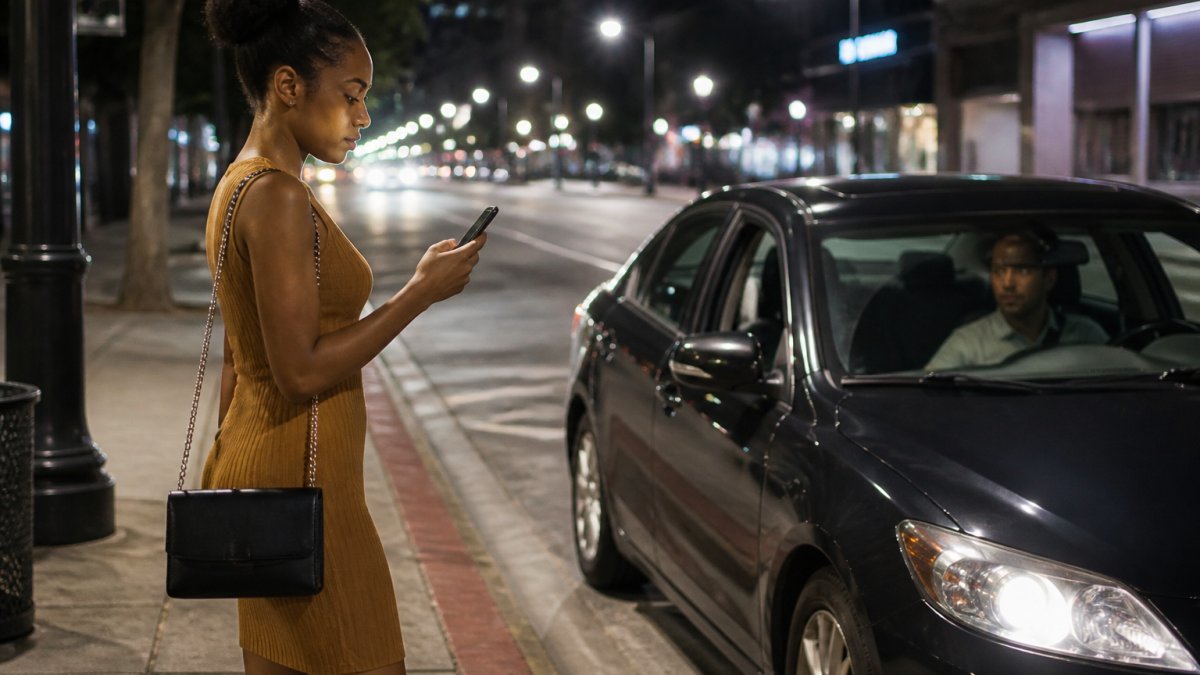
Run this checklist every time:
- Match the license plate to the one in your app
- Confirm the driver's name and photo
- Ask the driver to state your name first
- Check that the make and color of the car match
- Share your trip with a friend through live trip sharing
- Sit in the back seat
- Keep your phone charged and your SOS button ready
ZENDARYDE adds a Femme-Safe option that matches riders with women drivers, plus two-way ratings and driver background checks, so the verification starts before the car ever reaches you.
How to Get a Free Ride Home After Drinking
A free ride home after drinking almost always comes from a structured program, not a random favor. Know which programs exist, what they cover, and how to confirm one is active before you need it, most people never look until last call.
The Four Program Types You Will Encounter
Government and municipal programs. Some city and county governments fund sober-ride programs through traffic-safety or public-health budgets.
Nonprofit and community programs. Local nonprofits, faith groups, and campus organizations sometimes offer voucher-based rides, with the narrowest eligibility (students, seniors, specific neighborhoods) and shortest operating windows.
Rideshare-sponsored credits. Some platforms and local sponsors issue promotional ride credits, typically one-time, capped, and expiring.
Insurance and employer programs. A few auto insurers and large employers offer safe-ride reimbursements.
What Free Rides Actually Cost You
"Free" rarely means zero. Common patterns include:
- A voucher capped at a fixed dollar amount, with the rider covering anything above the cap
- A free trip only within a set radius or between specific ZIP codes
- A free ride only on certain nights, often Friday and Saturday
- A required registration, app download, or eligibility check before the code works
- Gratuity not covered, even when the fare is
Before relying on a program, confirm the dollar cap, geographic limit, operating hours, and whether gratuity is included. If any is unclear, treat the ride as discounted rather than free and keep a paid backup ready.
How to Verify a Program Is Real and Current
A program listing can be outdated within a season. Verify in this order:
- Check the sponsoring organization's own website for a current program page, not a third-party list
- Call the published phone number and ask whether the program is operating this week
- Confirm the eligibility rules and the exact coverage area
- Ask how the voucher or code is delivered and how long it stays valid
- Save the confirmation and the program's phone number in your phone
Where to Find Local Programs
The 211 helpline directory connects callers to community rides and transportation assistance by ZIP code, and the Eldercare Locator run by the Administration for Community Living helps older adults find local transportation support.
Eligibility, cost, and availability vary by program and location, and programs open and close with funding cycles. Check current terms before you rely on one, and always keep a paid backup ready.
Compare Ride Options: Rideshare, Taxi, and Public Transit
Choosing between rideshare, taxi, and public transit comes down to four questions: how soon you need a car, what you can spend, whether you need your own vehicle home, and how much verification you want. The right pick depends on the night.
| Option | Typical Wait | Cost Pattern | Best For | Verification You Should Do |
|---|---|---|---|---|
| Rideshare app | A few minutes to 20+ at peak | Upfront fare; some platforms add surge | Late nights, door-to-door trips | Match plate, driver name, and photo in the app |
| Taxi | Varies; call ahead at peak | Metered fare plus tip | Areas with weak app coverage | Confirm company name, driver ID, and meter start |
| Public transit | Fixed schedule | Flat fare | Budget trips on fixed routes | Board only at marked stops; check late-night service |
| Sober-driver service | Booked in advance | Flat fee based on distance | Getting your own car home | Confirm the service is licensed and insured locally |
| Community program | Varies; often advance registration | Free or reduced, often capped | Free or low-cost rides | Confirm eligibility and coverage before you go out |
How to Decide Under Pressure
Work through these questions in order:
- Do you need your own car home? If yes, a sober-driver service or a designated driver is the only option that solves the problem. A rideshare gets you home but leaves the car behind.
- How soon do you need to leave? If you need a car in the next few minutes, an app with live matching is usually fastest. Taxis can be faster in areas where app coverage is thin, but only if you call ahead.
- What is your budget? Public transit is the cheapest when routes and hours line up. Rideshare fares rise at peak; taxis meter up in traffic. Set a ceiling before you book and stick to it.
- How much verification do you want? Apps give you a plate, a name, and a photo before the car arrives. Taxis give you a company and a driver ID. Transit gives you neither, which is why you board only at marked stops.
Cost and Timing Trade-Offs
Rideshare pricing is transparent at booking but moves with demand; a fare quoted at 9 p.m. can be materially higher at 1 a.m. on a weekend. Taxis meter continuously, so a long route in traffic can cost more than an earlier app quote. Public transit is the most predictable cost but least flexible, with late-night service often reduced or suspended.
For most late nights, a rideshare app gives the most visibility: you see the fare, driver, and route before you commit. ZENDARYDE keeps fares upfront with zero surge pricing, making budgeting simpler. Taxis remain a strong backup when data is weak, and public transit is cheapest when routes and hours line up.
What to Do When No Ride Service Is Available
Sometimes no car appears: apps show long waits, taxis are booked, transit has stopped. When that happens, safety beats speed.
Work through these steps in order:
- Move to a safe, well-lit, public location and stay there
- Try a second provider or call a local dispatch line directly
- Ask a trusted friend or venue staff for help
- Wait inside a business rather than on the street
- As a last resort, contact local non-emergency services for guidance
Never accept a ride from an unmarked car or a stranger, and never drive yourself after drinking, even if you feel fine.
For accessibility needs, ask about wheelchair-accessible vehicles and service-animal policies when you book, not when the car arrives.
A night out should end with a calm ride home, not a gamble on whether a car shows up. Guest booking, fare splitting, and flexible scheduling handle shared rides, airport runs, and intercity trips without last-minute price changes.
Frequently Asked Questions
How can I verify that my rideshare driver is the right person?
Match the license plate, car make and model, and driver photo to what the app shows before you open the door. Ask the driver to confirm your name rather than volunteering it yourself. If any detail does not match, do not get in. Cancel the trip inside the app and request a new ride. Real-time GPS tracking and two-way ratings on platforms like ZENDARYDE give you a record of the trip, so keep the app open until you arrive.
What should I do if my rideshare driver or vehicle does not match the app?
Do not enter the vehicle. Step back to a lit, public spot and cancel the ride through the app so the mismatch is logged. Report the discrepancy to the platform's support team, then book a new ride or call a licensed taxi. If the driver pressures you or follows you, call 911. Verifying the plate and driver photo is one of the most important rideshare safety tips, and a legitimate driver will never rush you through that check.
How do I plan a ride home in advance for a night out?
Book your return trip before you leave home. Enter your pickup location and destination, choose a pickup time, and confirm the fare upfront so there are no surprises later. Save the driver details and share your trip with a friend. Programs like ZENDARYDE let you schedule airport-ready and late-night trips, and upfront fares mean the price you see at booking is the price you pay, even during busy hours.
Are there free ride home after drinking programs I can use?
Some nonprofits, campuses, and local transportation programs offer free or discounted rides during holidays and weekend nights. Check with your employer's commuter benefits, your school's student services, or dial 211 to ask about local transportation assistance. Availability, eligibility, and service areas vary, so confirm details before you go out rather than relying on a program at 1 a.m.