 blog
Best Ways to Travel Between Cities in 2026
Table of Contents
- How to Choose the Best Way to Travel Between Cities
- The Cheapest Way to Travel Between Cities
- Train Travel Between Cities
- Travel Between Cities Without a Car
- Intercity Travel Apps and Booking Platforms
- Door-to-Door Travel Time and Total Trip Cost
- Safety, Reliability, and Environmental Impact
- Frequently Asked Questions
Last Updated: October 19, 2026
How to Choose the Best Way to Travel Between Cities
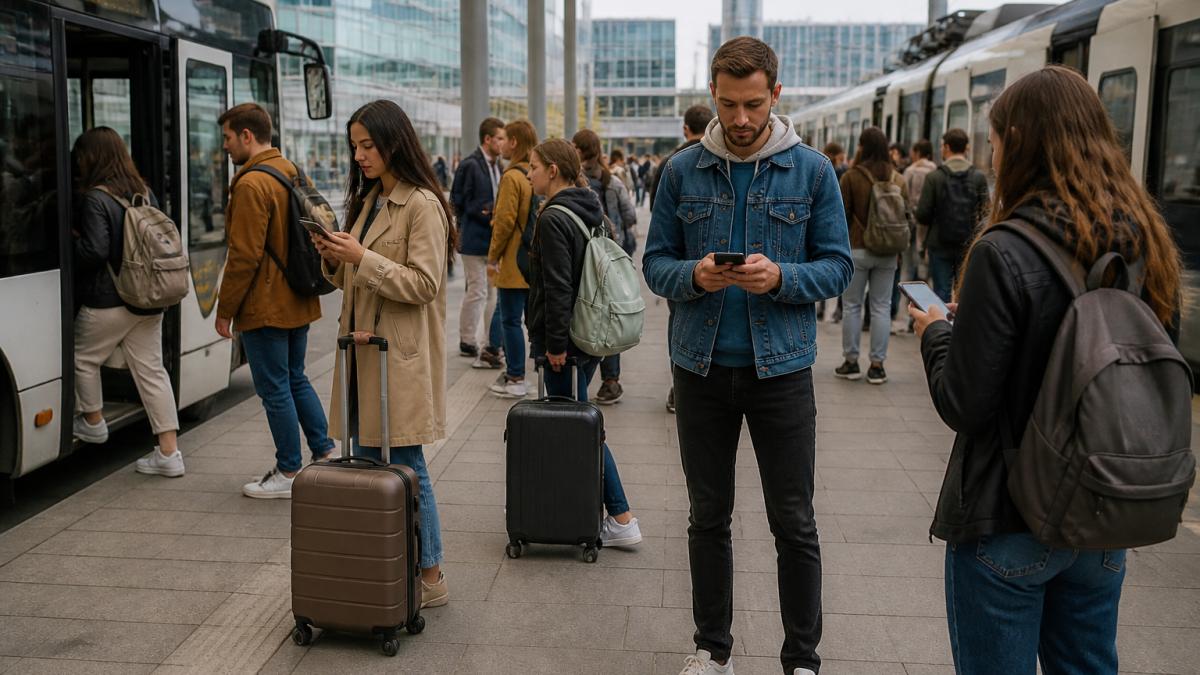
Most guides tell you to weigh distance, budget, and trip purpose, true but useless when you're actually booking. What you need is a repeatable sequence that eliminates options fast: distance band first, then total door-to-door cost, then trip purpose as the tiebreaker.
Step 1: Set the distance band
Distance is the fastest filter because it caps which modes are plausible. These bands are starting points, but they eliminate most bad options immediately.
- Under 100 miles: Driving, intercity bus, and rideshare dominate. Air travel is almost never worth it once you count airport time. Trains only make sense where a dedicated corridor exists.
- 100 to 300 miles: This is the contested middle. Trains, buses, and driving all compete, and the winner usually comes down to whether you have a car at each end and whether a rail corridor serves the route.
- 300 to 700 miles: Planes become economically rational for time-sensitive trips, but trains and buses remain viable for budget travelers and for overnight segments.
- Over 700 miles: Flying wins on time for nearly everyone except travelers who specifically want a long-distance rail experience or are moving heavy luggage.
Step 2: Calculate total door-to-door cost, not fare
The sticker price misleads. Build a total for each surviving mode:
- Fare or fuel for the segment itself.
- Getting to and from the terminal, parking, rideshare, or transit at both ends. Airport transfers routinely add $40 to $80 round trip in major metros; a downtown train station may add nothing if you can walk or take local transit.
- Baggage and add-on fees, checked bag fees on many domestic carriers, or extra luggage charges on some bus lines.
- Time cost, value your hours. A common pattern is to assign an hourly value to your time and multiply it by the door-to-door hours; this alone often flips the plane-versus-train decision on 200 to 400-mile routes.
A $120 plane ticket plus $60 in airport transfers and three hours of unpaid waiting is not cheaper than a $90 train ticket from a downtown station you can reach on foot.
Step 3: Use trip purpose as the tiebreaker
Once two modes are within roughly 20 percent on total cost and time, purpose decides:
- Business or time-critical: prioritize schedule frequency and on-time performance over price. A mode that runs every hour absorbs a missed connection; a mode that runs twice a day does not.
- Budget leisure: prioritize total cost and flexibility on change fees. A cheap fare you can't rebook is a trap if your plans might shift.
- Family with young children or heavy luggage: prioritize door-to-door simplicity and baggage handling. Fewer transfers beats a faster itinerary.
- Accessibility needs: prioritize step-free station access and advance-assistance booking, which vary widely by mode and operator.
Step 4: Sanity-check reliability and backup
Before you book, ask one question: if this trip is delayed or canceled, what is my backup? A route served by multiple daily departures across two modes (for example, a corridor with both rail and bus) is far more resilient than a single daily flight. Build in a buffer when you have a hard arrival deadline.
No mode is universally best. This sequence tells you which is best for the specific trip in front of you, the only question that matters when booking.
The Cheapest Way to Travel Between Cities
The cheapest way to travel between cities remains intercity bus networks and rideshare options, particularly when splitting fares with other travelers heading the same direction.
Bus networks offer the lowest per-mile cost. Greyhound, Megabus, and regional carriers charge far less than other modes: a 300-mile bus trip might cost $25 to $50 per person, versus $150 to $300 by plane.
Rideshare and cost-splitting is another budget option. ZENDARYDE's guest booking feature allows fare splitting without requiring everyone to install the app, making group rides easier to coordinate.
The catch is time and comfort: bus seats aren't built for 8-hour journeys, and rideshare vehicles aren't ideal for very long distances either.
Train Travel Between Cities
Train travel between cities balances speed, comfort, and cost more evenly than buses. Amtrak connects most major cities with multiple daily routes, at speeds between bus and plane.
Speed varies by route. Northeast Corridor trains move faster than cross-country routes. A trip from Boston to New York takes under 4 hours by train.
Trains run on fixed schedules, which helps planning, though delays occur and you're bound to the railroad's timetable. That works well for planned trips but poorly for urgent travel.
Trains appeal to travelers who value comfort and want to avoid driving: you can work, read, or relax en route, and you don't need to arrive hours early like at airports.
Travel Between Cities Without a Car
Traveling between cities without a car means combining modes or relying on rideshare and public transit, typically planes, trains, buses, or rideshare platforms.
Public transit integration works best where networks are developed. In the Northeast, Amtrak connects major cities and buses fill gaps; local transit, rideshare, or walking completes the journey.
Rideshare platforms provide flexible, door-to-door service without owning a car. ZENDARYDE offers upfront fares and real-time driver matching, eliminating surge pricing surprises.
Planes work for longer distances when you don't drive.
The key is planning ahead: identify which modes connect your origin and destination, book accordingly, and build in buffer time between connections.
Intercity Travel Apps and Booking Platforms
Modern intercity travel apps consolidate booking, real-time updates, and safety features into single platforms, handling everything from fare comparison to payment and driver communication.
Real-time booking and upfront pricing eliminate uncertainty. Apps show available rides, exact fares, and estimated travel times before you book.
Safety features have become standard across rideshare platforms. Two-way ratings between drivers and passengers create accountability. Background checks verify driver history.
Booking ahead reduces stress and often improves pricing. Apps let you schedule rides days in advance, ensuring availability for time-sensitive travel, and some platforms discount advance bookings.
Integration with other services simplifies the full journey: apps now connect with hotel booking, airline reservations, and local transit information, so you manage the entire trip from one platform.
Door-to-Door Travel Time and Total Trip Cost
The true measure of intercity travel efficiency isn't departure-to-arrival time, it's door-to-door travel time plus total cost, including all intermediate steps.
Flying 300 miles sounds fast until you add airport arrival (2 hours early), security, boarding, baggage claim, and ground transportation, often 6-7 hours total. A train for the same distance takes 5-6 hours door-to-door.
Cost calculations should include parking fees, airport parking, or rideshare to the airport. A $120 plane ticket becomes $180 when you add $60 for airport transportation.
ZENDARYDE's intercity rideshare option simplifies this calculation. The upfront fare includes all transportation costs, no hidden fees, no surge pricing surprises. You know your total cost before booking, making budget planning straightforward.
Document actual door-to-door times and costs for trips you take regularly.
Safety, Reliability, and Environmental Impact
Safety, reliability, and emissions are the three factors travelers most often skip and most often regret skipping. Each mode has a distinct profile, and the differences matter most when you have a hard deadline, a tight connection, or a sustainability commitment.
Safety: what actually differs
Per mile traveled, commercial aviation and scheduled intercity rail and bus have strong safety records relative to personal vehicles, largely because professional operators, maintained equipment, and regulatory oversight reduce risk. Rideshare safety depends on platform vetting: confirm background checks, two-way ratings, real-time GPS tracking, and in-app emergency buttons before booking, especially for solo and late-night travel. Your risk is dominated by the operator and vehicle, so choose vetted, rated providers and avoid unlicensed long-distance ride arrangements.
Reliability: the factor that decides tight itineraries
Reliability is where modes diverge most. Break it into four mechanics:
- Schedule frequency: how many departures per day serve your route. A corridor with hourly service absorbs a missed or delayed departure; a route with one daily flight or train does not. Frequency is the single best proxy for resilience.
- On-time patterns: aviation delays cluster around weather and air-traffic congestion at hub airports, and delays compound through the day, so early-morning departures are statistically the most reliable. Rail delays tend to come from infrastructure and shared-track congestion. Bus delays come from highway traffic, which is worst during commute hours. Rideshare wait times stretch during peak demand.
- Cancellation and rebooking policy: know before you book whether a canceled flight gets you rebooked automatically, whether a train ticket is refundable or changeable, and whether a bus ticket can be moved to a later departure. Flexible fares cost more upfront but protect you when plans shift.
- Backup plan: the most resilient itineraries have a second mode available on the same corridor. If your flight cancels and a train or bus runs the route, you have an out. If you're on a single daily flight to a small airport, you don't.
Environmental impact: a decision factor worth using
Emissions per passenger-mile vary widely by mode, and the ranking is consistent: scheduled intercity buses and trains produce the lowest emissions per passenger-mile, especially when well occupied; personal vehicles and rideshare fall in the middle, with occupancy driving the result (a full car is far better per person than a solo driver); and commercial aviation produces the highest emissions per passenger-mile on short-haul routes, where takeoff and climb dominate. Two practical implications follow. First, for trips under roughly 300 miles, choosing rail or bus over a short flight is the highest-leverage emissions decision most travelers can make.
Putting the three together
The modes trade off predictably. Planes are fast but delay-prone at hubs and highest-emission. Trains balance speed, comfort, and low emissions but are constrained by corridor coverage and fixed schedules. Buses are cheapest and lowest-emission but slowest and least comfortable on long hauls. Rideshare is flexible and door-to-door, but reliability and emissions depend on driver availability and occupancy. Match the profile to your priorities: deadline-driven travelers should weight frequency and on-time patterns; budget and climate-conscious travelers should weight bus and rail; anyone with a tight connection should confirm rebooking policy before paying.
Frequently Asked Questions
What is the cheapest way to travel between cities?
Buses typically offer the lowest fares for intercity travel, followed by rideshare when splitting costs with other passengers. Long-distance bus networks provide budget-friendly options across most routes. For shorter distances, rideshare platforms with upfront pricing and fare-splitting features can compete with or beat bus prices when multiple travelers share the ride. Train travel is usually mid-range, while flying is typically the most expensive per mile, though competitive pricing on short routes can occasionally rival bus fares.
How do intercity travel apps help you find the best transportation option?
Intercity travel apps streamline booking by comparing multiple transport modes, buses, trains, planes, and rideshare, in one place. They show real-time schedules, upfront fares, and estimated travel times so you can compare total cost and convenience side-by-side. Apps with transparent pricing eliminate surprise charges, and features like fare-splitting and guest booking make group travel simpler. Real-time GPS tracking and one-tap SOS alerts add safety confidence, especially for solo or late-night intercity trips.
Can you travel between cities without a car?
Yes. Public transit, buses, trains, and light rail, connects most major city pairs. Long-distance buses and regional trains serve intercity routes affordably. Rideshare platforms offer door-to-door service without owning a vehicle. Flying works for longer distances. Many travelers combine methods: taking local transit to a station or airport, then rideshare or public transport at the destination. This multi-modal approach often costs less and is more flexible than renting or driving your own car.
What factors should I consider when comparing intercity travel options?
Compare distance, total travel time (including transfers and waiting), upfront fare, comfort level, and reliability. For short trips under 200 miles, rideshare or buses are often efficient. Trains can be a good option for mid-range distances (200-500 miles) with better comfort. Flights win on speed for distances over 500 miles, though door-to-door time, airport fees, and parking costs can offset speed savings. Budget, schedule flexibility, and accessibility needs also matter, choose based on your priority and trip context.